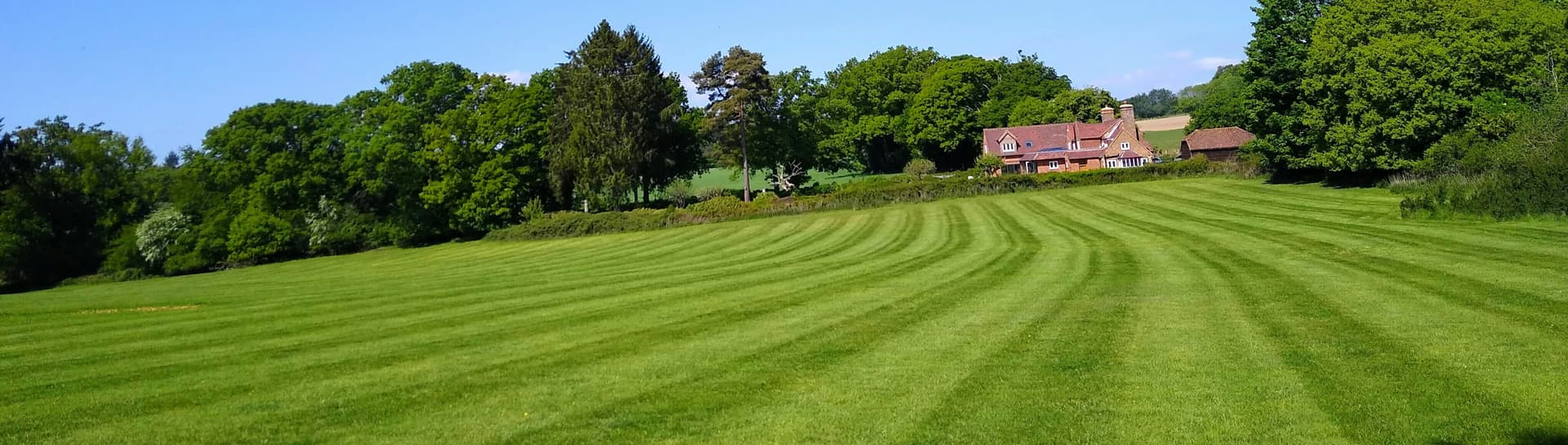
Help Thin, Compacted Turf Rebuild from the Roots
Combine core aeration with well-timed seeding to improve soil contact, relieve compaction, and establish denser cool-season grass.
When Aeration and Overseeding Actually Work
Lawn Aeration and Overseeding
Core aeration removes small soil plugs to create temporary channels for water, oxygen, and roots. Overseeding distributes fresh grass seed across the opened turf, producing better soil contact than seed scattered over an untouched surface.
What you get
- 01
Reduced surface compaction where lawns receive regular traffic
- 02
Improved seed contact across thin or tired turf areas
- 03
Greater opportunity for moisture and oxygen to enter the root zone
- 04
Fresh grass varieties introduced without removing the full existing lawn
How it works
Assess Turf Conditions
Examine thinning, traffic, shade, drainage, thatch, irrigation patterns, compaction, and the recent lawn history.
Choose Timing and Seed
Match work to a favorable cool-season establishment window and a blend suited to sunlight and use.
Pull Soil Cores
Make planned passes over accessible lawn, focusing attention where compaction and wear are most apparent.
Distribute Seed
Apply seed evenly at the selected rate with extra attention to bare transitions and exposed viable soil.
Guide Establishment
Set expectations for watering, mowing, leaves, foot traffic, and observation during germination and root growth.
Frequently Asked Questions
- Aeration removes soil cores to relieve compaction. Overseeding adds grass seed. Pairing them creates openings where seed can contact soil and receive moisture.
- Usually they can remain. Weather and mowing break them apart, returning useful soil and organic matter to the lawn surface.
- Wait until new grass has grown enough for cutting. Use a sharp blade, remove a limited portion of leaf, and turn equipment gently.
- Only when surface compaction is the primary cause. It cannot resolve a low grade, blocked outlet, high groundwater, or concentrated runoff.
- Insufficient sunlight, root competition, dry soil, leaf cover, excess moisture, unsuitable seed, or inconsistent watering can prevent establishment.