Craft Landscapes That Last
Mana on Earth handles landscaping and outdoor property work across Somerset County and surrounding towns. Our services cover retaining walls, drainage, lawn care, seasonal cleanup, planting, soil work, tree service, exterior cleaning, and snow removal. We offer free on-site estimates so each job can begin with the actual grade, access, water movement, and site conditions.
Our Services
Mana on Earth provides landscaping and outdoor property work across Somerset County and the surrounding towns. With 8 years in business as a Registered Home Improvement Contractor, we handle retaining walls, drainage, lawn maintenance, seasonal cleanup, planting, soil work, tree service, exterior cleaning, and snow removal. Each job starts with the conditions on the property, including access, grade, soil, water movement, and nearby structures. Free on-site estimates allow homeowners to discuss the work where it will take place.
Retaining Walls
Retaining walls hold back soil and manage changes in grade. Work begins with layout, excavation, and preparation of a compacted base. Drainage, base depth, level, setback, and backfill all affect how the wall handles water pressure and freeze-thaw movement. We review the slope and runoff before building so the wall has a clear purpose, stable support, and a route for water behind it.
- Custom designs
- Durable materials
- Erosion control
Lawn Maintenance
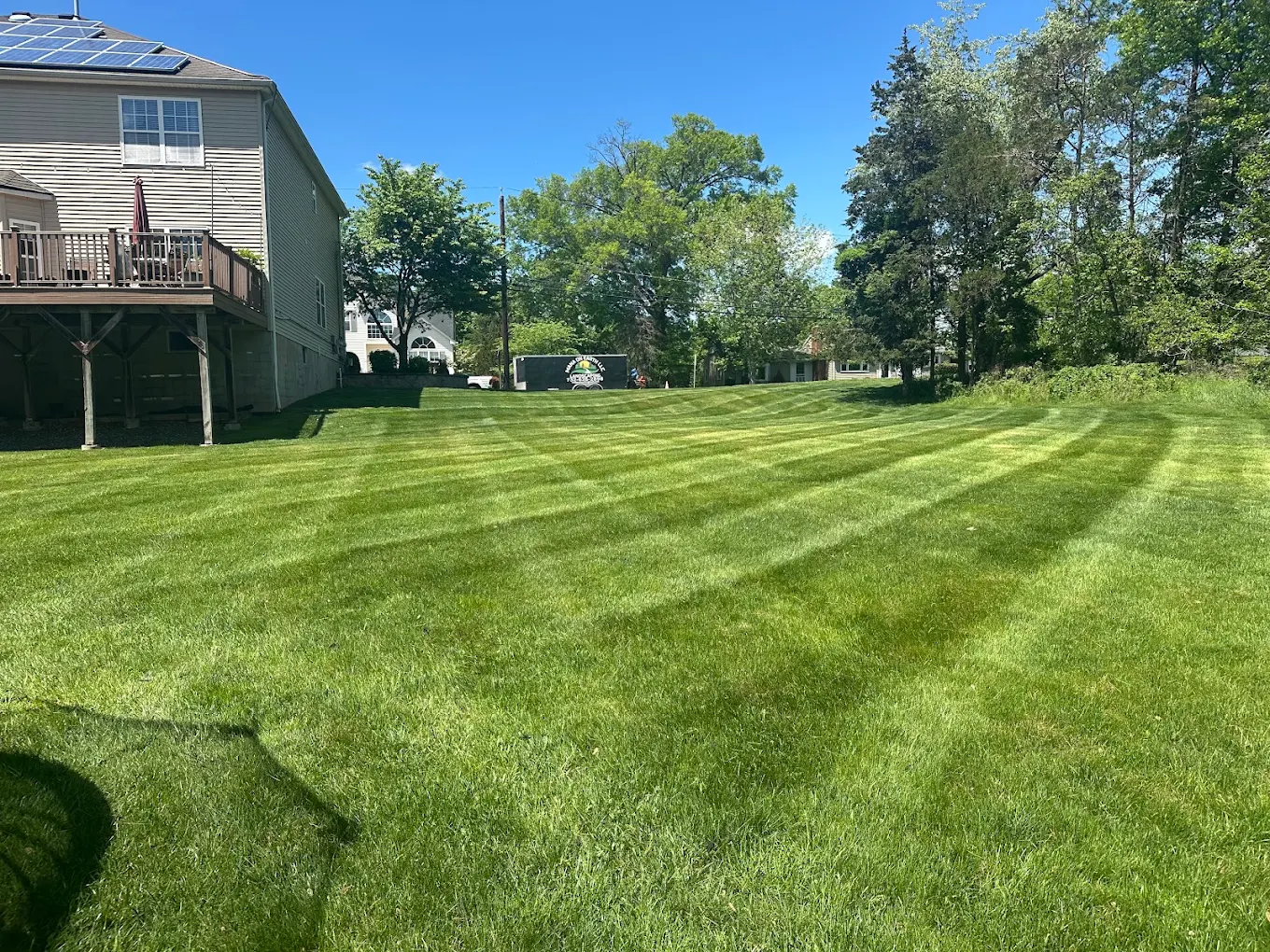
Lawn maintenance keeps grass and finished edges orderly through the growing season. The work includes consistent mowing, trimming around obstacles, and clearing clippings from walks and other hard surfaces. Cutting height and timing affect how turf responds to rain, heat, and active growth. A regular schedule also helps prevent heavy clumps, missed edges, and uneven cuts while supporting fertilization and practical weed control where needed.
- Weekly mowing
- Weed control
- Fertilization
Spring Clean Up
Spring cleanup removes the leaves, branches, and matted debris left after winter. Clearing lawns and planted beds makes it easier to see washouts, clogged drainage paths, worn edges, and areas that need fresh preparation. We organize the site before active growth so mowing, mulching, and bed work can be done on a clean surface rather than over material that can trap moisture or block new growth.
- Debris removal
- Mulching
- Bed preparation
Power Wash
Power washing removes dirt, organic buildup, and surface stains from suitable outdoor areas. Driveways, patios, decks, concrete, and masonry do not all respond to pressure in the same way, so the method should match the material and its condition. We review the surface before cleaning and use a controlled approach. The aim is to clear buildup without using excessive pressure that can mark or damage the area.
- Driveways
- Patios
- Decks
Drainage & Erosion Control
Drainage and erosion work starts by finding why water collects or moves too quickly. We review low areas, grade, runoff, downspout discharge, and the route water follows across the property. Depending on the site, the work may involve grading, French drains, sump pump discharge, or another suitable outlet. The purpose is to direct water away from problem areas and reduce repeated washouts, standing water, and damage to lawns or beds.
- French drains
- Sump pumps
- Grading
Snow Removal
Snow removal clears identified driveways, walkways, and access areas while accounting for where the snow will be placed. Piles can block sightlines, cover drainage points, narrow travel paths, or direct meltwater back across pavement. We consider the property layout and changing temperatures when planning the work. The goal is dependable access without creating avoidable problems as piled snow settles, freezes, and melts between winter events.
- Reliable service
- Driveways
- Walkways
Planting & Sod Installation
Planting and sod installation begin with soil, sunlight, grade, water, and available space. Beds are prepared so plants can be set at a suitable depth without burying crowns, while sod needs smooth soil, close seams, and firm contact with the ground below. We consider native species and the way the area will be used during design consultation. Careful preparation helps new planting and turf establish evenly across the finished area.
- Native species
- Sod laying
- Design consultation
Mulching & Topsoil
Mulch helps beds hold moisture, limits exposed soil where weeds can take hold, and gives planted areas an orderly surface. It should be spread evenly and kept away from trunks, stems, and the building. Topsoil supports grading, seeding, sod, and planting where better soil is needed. We place material with the final pitch in mind so it supports growth without redirecting water toward another part of the property.
- Nutrient-rich
- Weed control
- Moisture retention
Gutter Cleaning
Gutter cleaning removes leaves and debris that stop roof water from moving through the system. Blocked gutters can overflow toward walls, walkways, planted beds, and the ground near the building. We clear clogs, check downspouts, and note visible roof-edge conditions from the work area. Open gutters and downspouts support the larger drainage path by carrying rainwater toward its intended discharge point instead of over the gutter edge.
- Roof inspection
- Clog removal
- Downspouts
Paver Patio Installation
A successful patio begins below the visible surface. Layout, excavation depth, compacted aggregate, bedding, edge restraint, joint material, and finished pitch work together to keep the space usable through Somerset County weather.
- A defined outdoor room for dining, seating, grilling, and conversation
- Positive surface pitch that directs rain away from the house
- Repairable individual units if a small area settles or needs access
Paver Walkways & Driveways
Walkways and driveways may share a paver style, but they perform different work. Base depth, unit thickness, bond pattern, width, slope, and perimeter support should match foot traffic, vehicle turning, snow clearing, and street connections.
- A visible pedestrian route that reduces muddy shortcuts across turf
- A driveway assembly planned for repeated vehicle loads and steering forces
- Comfortable transitions at porches, steps, garages, curbs, and sidewalks
Commercial Landscape Maintenance
Commercial grounds need clear priorities across turf, beds, entrances, parking islands, signs, walks, and shared outdoor areas. A useful maintenance plan organizes recurring and seasonal work while accounting for operating hours, deliveries, visibility, and site-specific concerns.
- Predictable service priorities throughout growth and seasonal transitions
- Orderly entrances, pedestrian routes, parking edges, and focal planting beds
- Mowing and edging decisions adjusted to current turf and weather conditions
Landscape Design
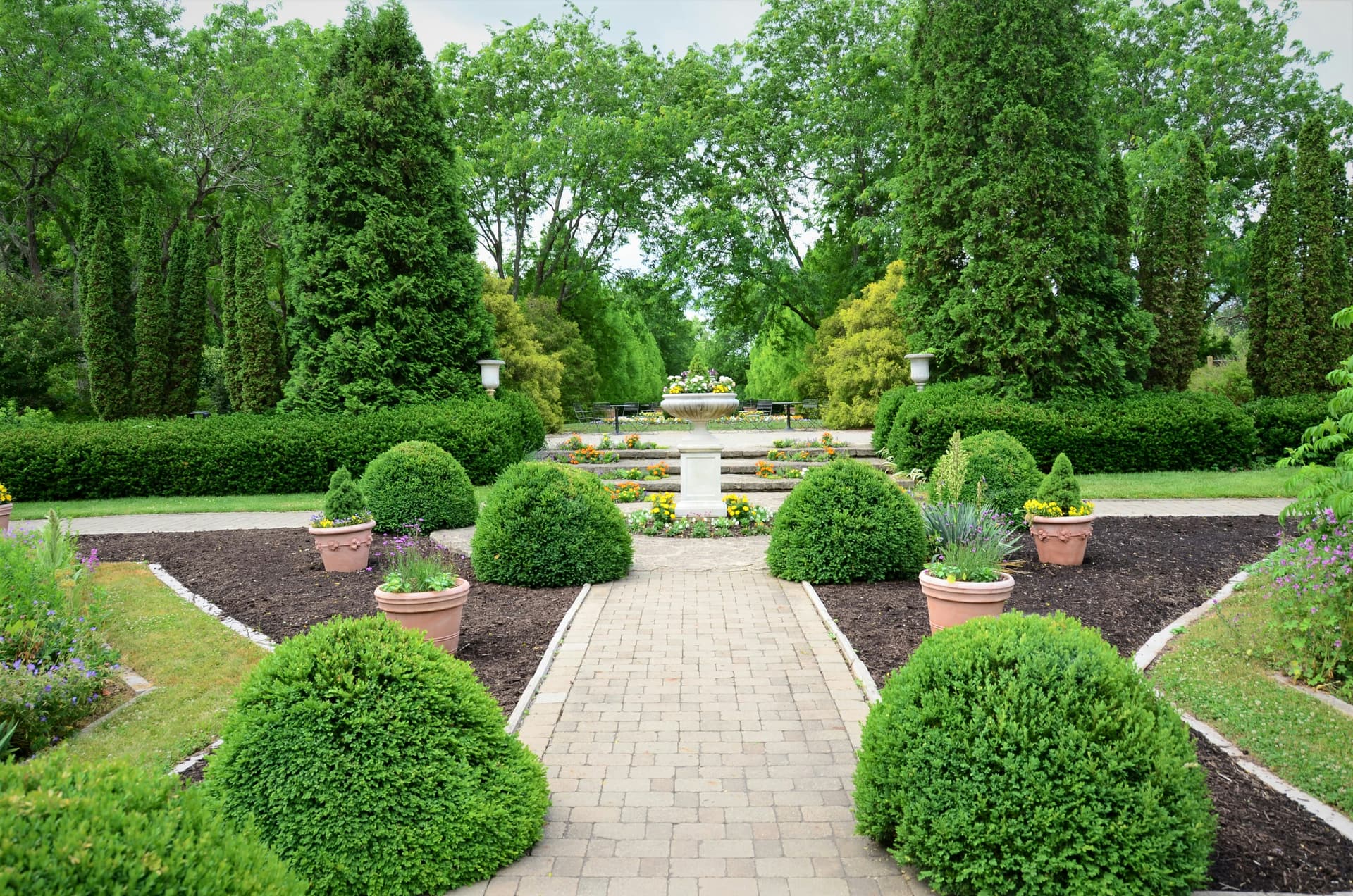
Landscape design converts separate ideas into an organized site direction. It considers existing conditions, desired uses, mature plant sizes, water movement, maintenance preferences, and the relationship between outdoor spaces and the architecture.
- A coordinated direction before money is spent on disconnected improvements
- Plants matched to sunlight, soil moisture, exposure, and available root space
- Clear circulation among doors, patios, walks, lawns, gardens, and work zones
Fire Pits & Outdoor Fireplaces
A fire feature succeeds when flame, seating, surface, access, and landscape are planned together. Placement should respond to structures, vegetation, utilities, smoke, property conditions, normal supervision, and applicable local requirements.
- A defined destination that encourages evening use of the yard
- Seating proportions organized for conversation and easy circulation
- Stable noncombustible surroundings that resist mud and chair movement
Lawn Aeration & Overseeding
Core aeration removes small soil plugs to create temporary channels for water, oxygen, and roots. Overseeding distributes fresh grass seed across the opened turf, producing better soil contact than seed scattered over an untouched surface.
- Reduced surface compaction where lawns receive regular traffic
- Improved seed contact across thin or tired turf areas
- Greater opportunity for moisture and oxygen to enter the root zone
Ponds, Waterfalls & Fountains
A water feature can provide a quiet focal point or an active centerpiece, but it also operates as a small system. Basin scale, circulation, overflow, power, splash, debris, planting, service access, and winter care should be considered together.
- Moving water that softens nearby street and neighborhood sounds
- A focal view from patios, windows, walks, or garden seating
- Choices from compact bubbling pieces to streams and open ponds
Outdoor Kitchens
An outdoor kitchen is a working environment exposed to sunlight, rain, grease, temperature shifts, and winter weather. Its layout should support preparation and serving while keeping hot equipment, guests, doors, and circulation from conflicting.
- Dedicated landing and preparation surfaces beside cooking equipment
- A grill position planned around airflow, circulation, and adjacent materials
- Weather-suitable storage that reduces repeated trips into the house
Excavation & Grading
Excavation removes or relocates material to make room for improvements. Grading shapes land to support drainage, access, lawn, planting, and construction while respecting foundations, property boundaries, utilities, trees, and neighboring elevations.
- Defined slopes that move surface water toward a suitable outlet
- Stable subgrades prepared for pavement, walls, lawn, or planting
- Correction of disruptive humps, shallow depressions, and abrupt transitions
Yard Debris Removal
Yard debris accumulates after storms, pruning, gardening, property changes, or years of storage in an unused corner. Organized removal separates ordinary organic material from items that need another handling route and exposes the area for its next use.
- Recovered lawn, bed, side-yard, or fence-line space
- Removal of leaf mats and branch piles that shelter unwanted animals
- Clear access to gates, sheds, utilities, drains, and work areas
Landscape Lighting
Effective outdoor lighting is based on what the eye should notice, not on placing a fixture beside every plant. A thoughtful concept balances routes, entrances, architecture, specimen trees, glare, darkness, controls, and future access to components.
- Clearer visual transitions along selected walks, steps, and gathering areas
- Focused emphasis on architecture, trees, masonry, and garden features
- Reduced glare through careful aiming, shielding, brightness, and position
Irrigation & Sprinkler Systems
Turf, shrubs, perennials, containers, sunny slopes, and shaded soil use water differently. A sound irrigation concept considers zones, pressure, precipitation rate, controls, head placement, runoff, plant growth, service access, and seasonal operation.
- Watering zones grouped around plant type and site exposure
- More even coverage with less spray on pavement and buildings
- Scheduling responsive to clay soil intake and current weather
Lawn Weed Control
Weeds occupy openings created by thin grass, disturbed soil, compaction, excess moisture, drought, low mowing, shade, or unsuitable turf. Effective management combines correct identification, better growing conditions, and a response timed to the target plant.
- Correct separation of annual, perennial, grassy, and broadleaf plants
- Attention to site conditions that repeatedly create exposed soil
- Timing based on growth stage instead of convenience alone
Plant Health Care
Plant health care is an observation-based approach to trees and shrubs across seasons. It considers site fit, planting depth, root-zone conditions, moisture, mulch, pruning history, weather stress, insects, disease, and nearby construction.
- Earlier recognition of changes in foliage, bark, growth, and branches
- Root-zone attention addressing water, compaction, mulch, and disturbance
- Plant-specific priorities rather than one routine applied to every species
Asphalt Paving
Asphalt is a different material from pavers, with different requirements. It is laid as a continuous surface over a prepared base, and it fails the same way most paving fails: from below, where an under-compacted base or trapped water lets the surface flex until it cracks.
- A continuous surface that sheds water and clears easily in winter
- Base depth and compaction sized for the traffic the drive will carry
- Pitch set so water leaves the surface rather than standing on it
Junk Removal
This is household and property clear-out rather than green waste. Furniture, appliances, boxes, and the mixed contents of a garage, basement, or shed, loaded and hauled away. Different material and a different destination from yard debris, which is why the two are handled separately.
- Bulky items removed without needing a vehicle or help of your own
- Garage, basement, shed, or yard cleared back to usable space in one visit
- Mixed loads handled rather than only one category of material