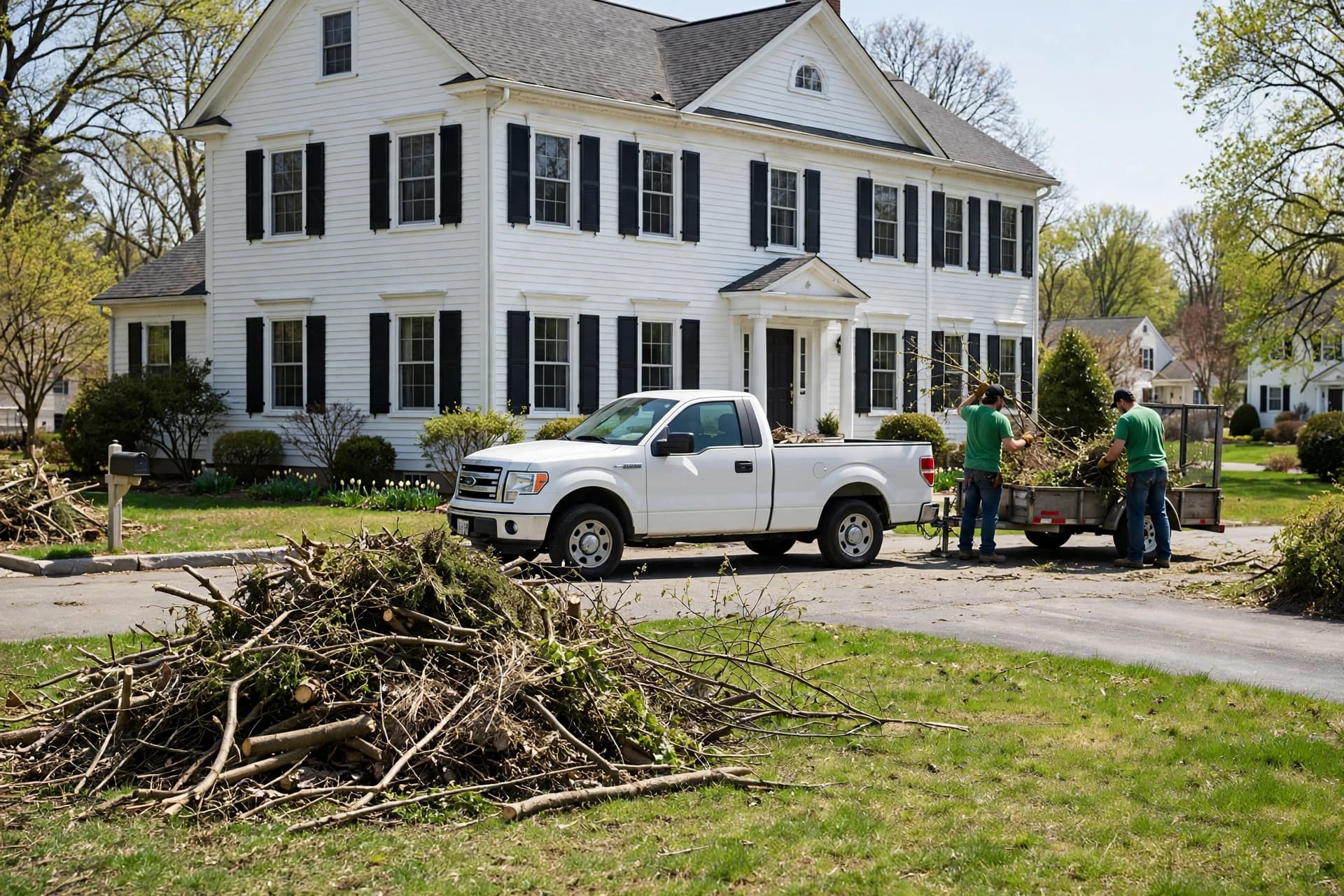
Clear Yard Debris and Recover Usable Space
Remove accumulated branches, brush, leaves, and landscape leftovers so lawns, beds, paths, and work zones function again.
When Debris Removal Is Its Own Job
Yard Debris Removal
Yard debris accumulates after storms, pruning, gardening, property changes, or years of storage in an unused corner. Organized removal separates ordinary organic material from items that need another handling route and exposes the area for its next use.
What you get
- 01
Recovered lawn, bed, side-yard, or fence-line space
- 02
Removal of leaf mats and branch piles that shelter unwanted animals
- 03
Clear access to gates, sheds, utilities, drains, and work areas
- 04
Less organic matter trapping moisture or smothering established turf
How it works
Review Material and Access
Identify debris types, volume, hidden obstacles, gate width, carrying distance, slope, and surfaces needing protection.
Separate Handling Categories
Distinguish brush, leaves, logs, soil, stone, and non-landscape items according to their removal needs.
Collect and Load Methodically
Gather loose matter, reduce bulky vegetation where practical, and avoid spreading it across clean portions of the yard.
Clean the Underlying Area
Rake remaining fragments and expose bare soil, turf damage, blocked drainage, holes, or buried objects.
Identify Restoration Needs
Determine whether the opened area needs seed, mulch, pruning, grading, erosion protection, or another planned finish.
Frequently Asked Questions
- Leaves, branches, brush, vines, and garden cutbacks are common examples. Logs, stumps, soil, stone, mixed trash, and unusual material should be identified separately.
- No. Seasonal cleanup mainly addresses leaf drop and garden preparation. Debris removal can happen any time after storms, pruning, construction, or long accumulation.
- Often yes, although gate size, stairs, distance, lawn softness, and slope change the approach. Access should be reviewed before scheduling.
- Mixed waste may require a different handling path from vegetation. Hazardous, sharp, or unknown items need an appropriate solution and should be disclosed.
- Not automatically. Shade, roots, grade, compaction, soil condition, and season determine whether seed, mulch, planting, or another finish is suitable.
Make Room for the Yard You Want to Use
Show what has accumulated and how the area is accessed so a practical removal approach can be planned.