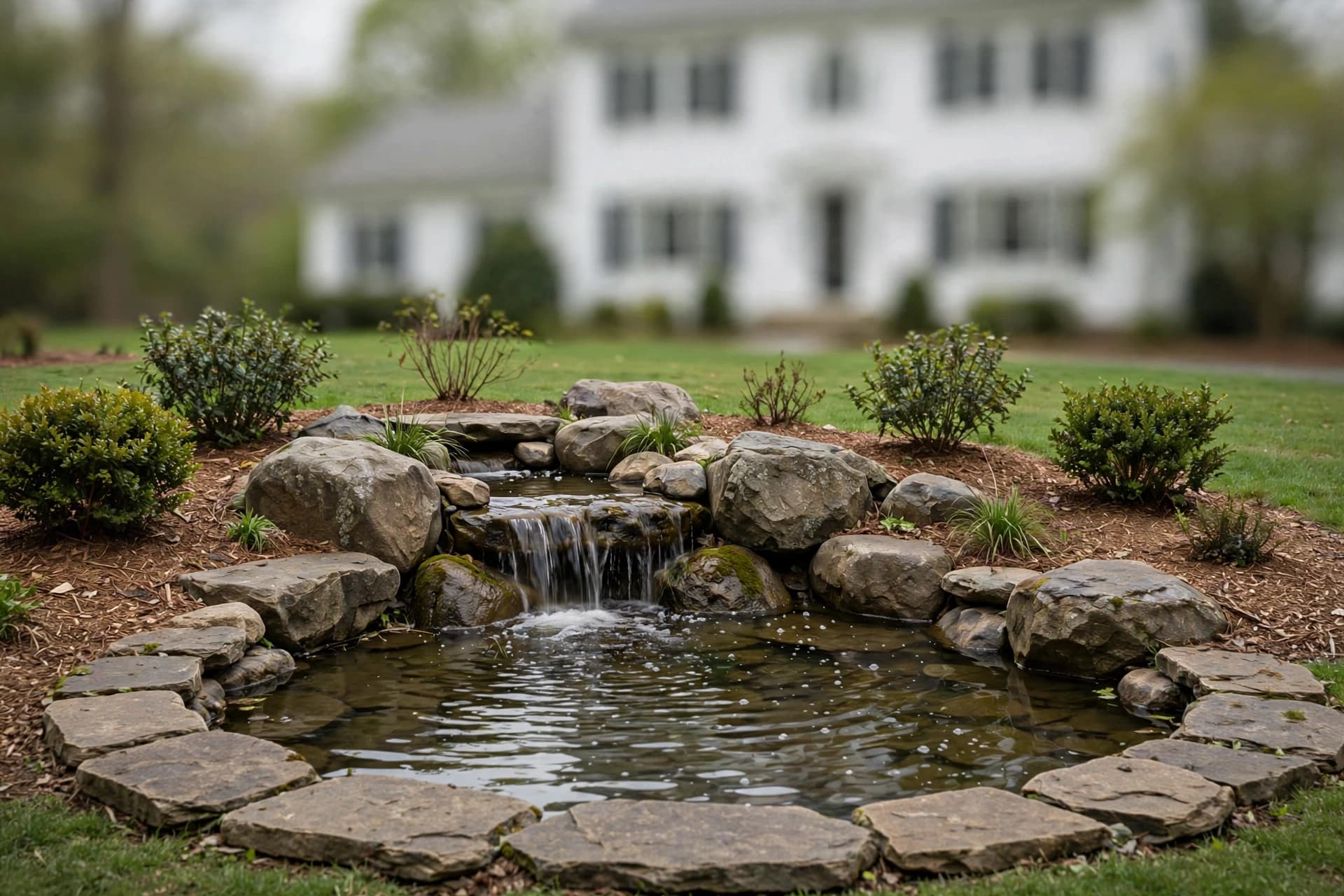
Bring Movement and Sound into the Landscape
Plan a pond, fountain, or recirculating feature as part of the surrounding grade, planting, views, and maintenance routine.
What a Water Feature Adds to a Yard
Ponds, Waterfalls and Fountains
A water feature can provide a quiet focal point or an active centerpiece, but it also operates as a small system. Basin scale, circulation, overflow, power, splash, debris, planting, service access, and winter care should be considered together.
What you get
- 01
Moving water that softens nearby street and neighborhood sounds
- 02
A focal view from patios, windows, walks, or garden seating
- 03
Choices from compact bubbling pieces to streams and open ponds
- 04
Planting opportunities for water-edge and moisture-tolerant species
How it works
Define the Desired Effect
Clarify sound, visibility, scale, interaction, planting character, and the amount of routine attention preferred.
Study Site Systems
Review slope, soil, runoff, trees, sunlight, power access, overflow direction, and equipment service space.
Configure the Feature
Develop basin, stream, fountain, reservoir, stone placement, circulation path, and adjacent grades as one design.
Build and Test Circulation
Shape the site, install containment and components, place structural stone, and observe flow and splash.
Finish Planting and Access
Stabilize disturbed soil, arrange perimeter plants, and preserve reachable filters, pumps, intakes, and reservoirs.
Frequently Asked Questions
- A recirculating fountain or disappearing cascade can fit a compact setting because water returns to a concealed reservoir instead of a broad open pond.
- Mosquitoes favor stagnant water. Consistent circulation reduces still zones, but every nearby vessel or depression that holds water should also be monitored.
- Drop height, flow, landing material, basin depth, surrounding walls, and listening distance determine whether the effect is a trickle or energetic splash.
- It can, but roots, shade, falling leaves, seeds, and branches add construction and upkeep concerns. Excavation should avoid important root systems.
- Operation depends on depth, plumbing, pumps, and product instructions. The design should support shutdown, protection, cleaning, or continued use where appropriate.
Find the Right Water Feature for Your Yard
Discuss the sound, scale, views, planting, and care level that fit your Somerville-area landscape.