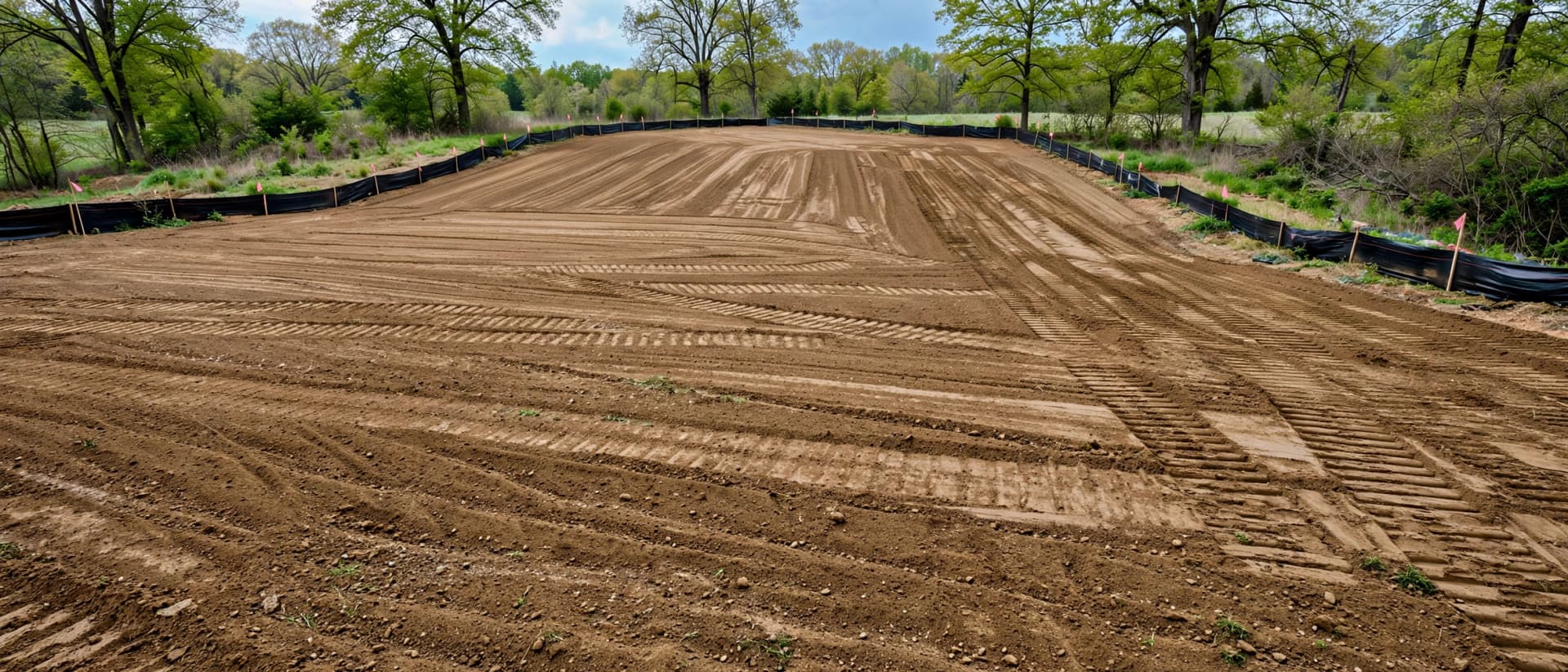
Shape the Ground Before Building Above It
Use deliberate excavation and grading to establish elevations, drainage routes, stable work areas, and clean transitions.
Why Grade Decides Where Water Goes
Landscape Excavation and Grading
Excavation removes or relocates material to make room for improvements. Grading shapes land to support drainage, access, lawn, planting, and construction while respecting foundations, property boundaries, utilities, trees, and neighboring elevations.
What you get
- 01
Defined slopes that move surface water toward a suitable outlet
- 02
Stable subgrades prepared for pavement, walls, lawn, or planting
- 03
Correction of disruptive humps, shallow depressions, and abrupt transitions
- 04
Better coordination between foundation clearances and surrounding grades
How it works
Assess Existing Grades
Observe runoff, low areas, slopes, soil, access, structures, trees, utilities, and adjacent elevations.
Plan Targets and Outlets
Set finish heights, required clearances, material quantities, flow direction, and tie-in points before digging.
Excavate Selectively
Remove unsuitable or excess material and create depth for bases, drainage elements, soil profiles, or features.
Place and Shape Material
Build controlled layers, compact structural zones, establish contours, and protect planting soil from excessive compression.
Fine Grade and Stabilize
Refine transitions, verify flow, prepare finish surfaces, and cover exposed ground with the planned treatment.
Frequently Asked Questions
- Excavation removes soil or creates depth. Grading shapes finished elevations, slopes, and transitions to support drainage and the intended landscape use.
- It can help when adequate height and a suitable outlet exist. Downspouts, hard surfaces, soil permeability, and incoming runoff may also require attention.
- Loose material consolidates, particularly in deep lifts or over soft ground. Structural zones need controlled placement, while planting zones must retain enough pore space for roots.
- Yes. Marked public lines plus private power, water, drainage, lighting, and other site systems need review before excavation begins.
- Soil should be workable rather than frozen or saturated, and the schedule should allow disturbed ground to be stabilized promptly afterward.