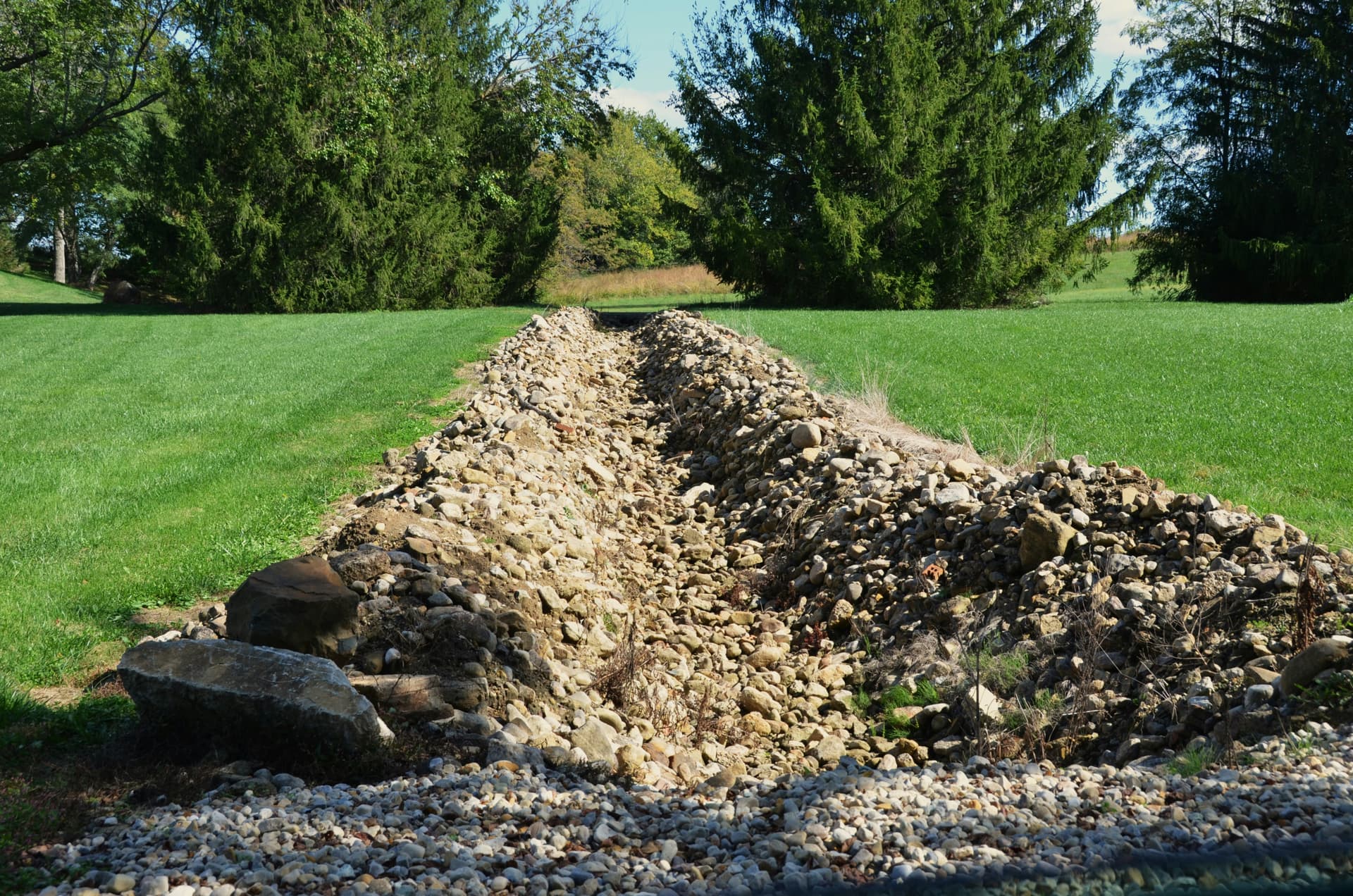
Find the Water Before Installing Anything
Wet spots, washouts, and soil on the driveway are symptoms. The fix depends on where the water starts and where it is trying to go.
Finding Where a Drainage Problem Starts
The place water shows up is rarely the place the problem starts. A soft corner of the lawn is often a downspout discharging thirty feet uphill. Soil crossing the driveway after every storm usually means a grade upslope is shedding faster than the ground can absorb. Installing a trench at the wet spot without answering that question tends to relocate the symptom rather than remove it. So the first visit is diagnostic. We follow the route water takes across your property, look at roof runoff and where downspouts actually let go, and check the grade between the source and the place you are noticing trouble. Only then does it make sense to talk about what gets installed, because the answer is sometimes regrading, sometimes interception, sometimes conveyance to a better outlet, and often a combination. Fall matters as much as the pipe. A line laid without consistent pitch holds water and silts up. An outlet that cannot accept the volume backs the whole system up during the storms that matter most. We would rather spend the time getting the diagnosis right than install something that looks like a solution for one season.
Drainage & Erosion Control
Drainage work fails when it is installed as a product rather than a diagnosis. A trench in the wrong place moves the problem twenty feet. We trace the route water takes across the property first, then decide what the site actually needs to intercept, carry, or slow it down.
What you get
- 01
The source of the water identified instead of only the place it collects
- 02
Soil kept where it belongs rather than washing onto walks and drives
- 03
Standing water reduced in areas that stayed soft long after rain
- 04
Runoff carried to an outlet that can actually take it
Frequently Asked Questions
- Usually because the drain addresses where water collects rather than where it comes from, or because it lacks consistent fall to an outlet that can take the volume. Both are common, and both are diagnosis problems rather than product problems.
- Sometimes, and that is the simpler outcome when it is available. If the ground can be reshaped so water leaves on its own, that is often more durable than installing something that has to keep working. We look at that possibility first.
- Somewhere it can actually go without creating a new problem for you or a neighbor. Identifying a workable outlet is part of the diagnosis, and if there is not a good one, that changes the design before anything gets installed.
- They are related but not identical. Drainage is about moving water. Erosion control is about keeping soil in place while it moves. A slope can need both, and the plant and grade side of the answer matters as much as the pipe side.
- Rain. Some of what a system does only shows up during a real storm, so we would rather check behavior after the fact than declare it finished on install day. Tell us if something still looks wrong after the next heavy rainfall.