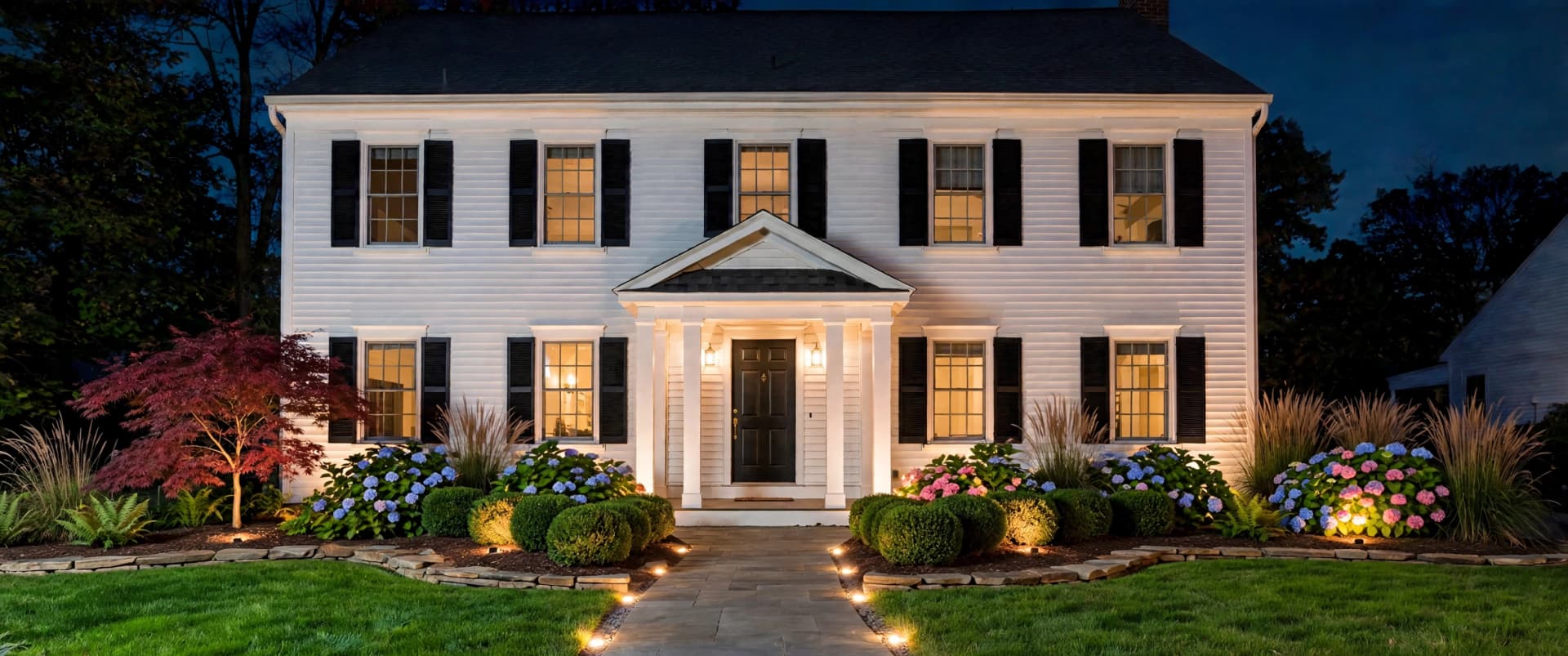
Reveal the Landscape After Dark
Use restrained layers of light to support evening movement, highlight selected features, and preserve a comfortable nighttime atmosphere.
Lighting Planned Around the Darkness
Landscape Lighting Planning
Effective outdoor lighting is based on what the eye should notice, not on placing a fixture beside every plant. A thoughtful concept balances routes, entrances, architecture, specimen trees, glare, darkness, controls, and future access to components.
What you get
- 01
Clearer visual transitions along selected walks, steps, and gathering areas
- 02
Focused emphasis on architecture, trees, masonry, and garden features
- 03
Reduced glare through careful aiming, shielding, brightness, and position
- 04
Layered nighttime depth instead of a flat row of identical points
How it works
Identify Nighttime Goals
Choose primary views, arrival paths, entertaining zones, dark transitions, focal points, and glare-sensitive locations.
Develop Lighting Effects
Consider downlighting, grazing, uplighting, path illumination, and restrained ambient layers for different features.
Plan Routes and Controls
Map component positions, connection paths, operating preferences, expansion needs, and reachable service locations.
Review Placement and Aiming
Avoid trip conflicts, mower damage, blocked beams, window glare, and unnecessary spill beyond the property.
Anticipate Seasonal Change
Account for foliage, pruning, leaf drop, snow, and growth that can alter beam paths or cover equipment.
Frequently Asked Questions
- There is no useful count without a concept. Focal points, route changes, viewing distances, brightness, architecture, and the desired amount of darkness determine quantity.
- The source may be visible or aimed toward a normal sightline. Shielding, lower output, improved angles, mounting changes, and fewer points can help.
- They can. Mature dimensions, seasonal leaves, pruning, and wind movement should influence location. Some components may need adjustment as the garden develops.
- Yes. Existing pavement, roots, beds, walks, and trees shape routing and placement. Crossings and connection points need careful coordination.
- Controls can match arrival, entertaining, and household routines. Scheduling should also respect neighbors and the benefit of restoring darkness later at night.