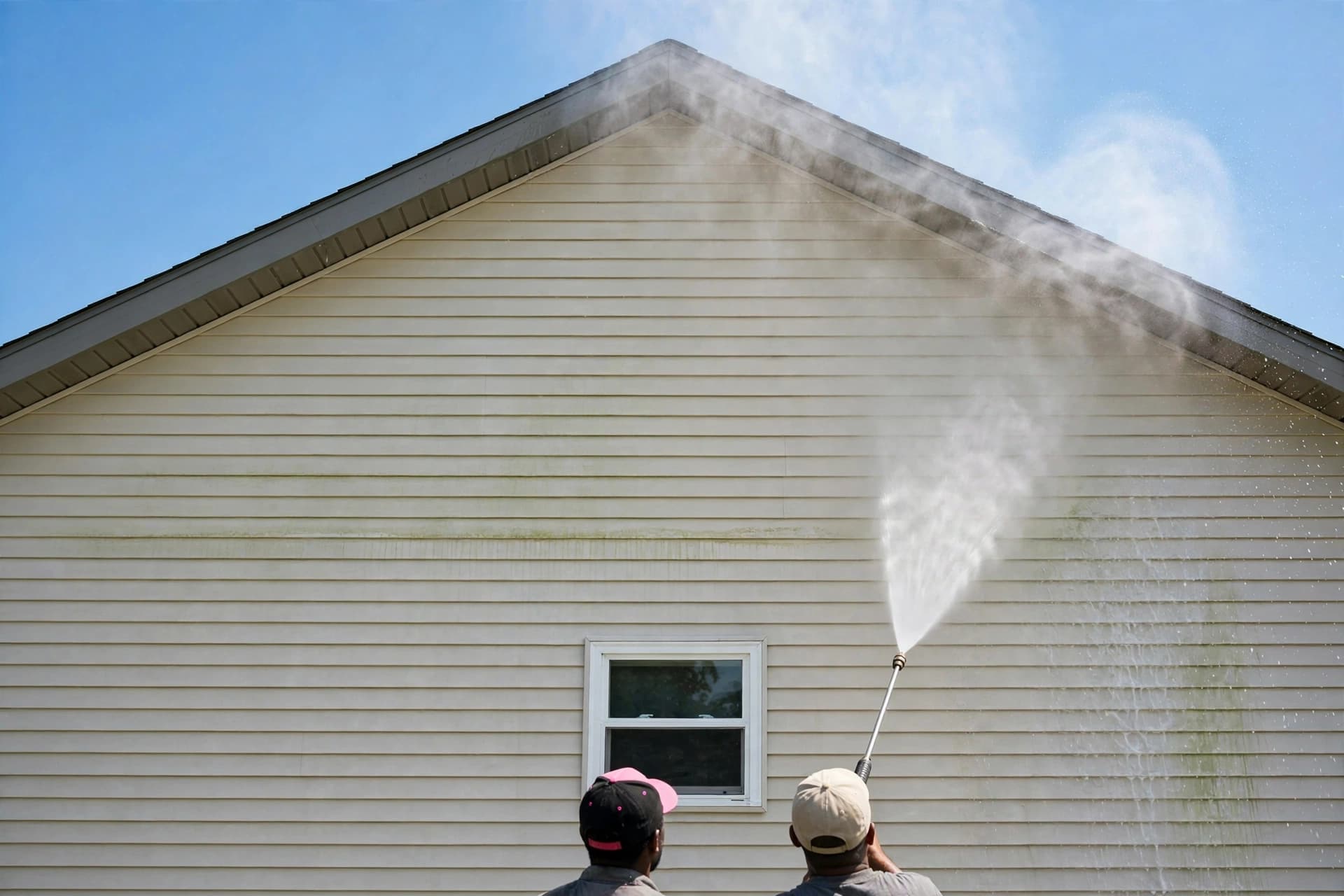
Surfaces Cleaned Without Being Damaged
Pressure matched to the material, because the setting that strips a concrete drive will etch siding and blow out paver joints.
What Builds Up on Exterior Surfaces
Exterior surfaces in this climate collect more than dirt. Shaded concrete grows a film of algae that turns slick after rain. North-facing siding holds organic buildup that dulls the color long before the paint has actually failed. Patios and walkways darken so gradually that the change only registers once a section gets cleaned and the contrast shows up. Pressure alone is not the answer, and it is where most of the damage we get called about originates. Wood takes surface scarring that does not wash out. Paver joints lose their sand and start shifting underfoot. Siding can be driven with water in the wrong direction. The right approach depends on what the surface is made of and what condition it is in before anyone starts, which is why we look first rather than arriving with a single setting. Done properly, the result is a property that reads as maintained rather than tired. Walks stop being slick in the shade, patios go back to the color they were, and the difference is usually most obvious on the surfaces people had stopped noticing.
Power Washing
Most power washing damage comes from treating every surface the same. Concrete tolerates pressure that will scar wood, and paver joints will empty out under a setting that is fine for a foundation wall. We identify the surface first, then choose pressure, distance, and approach to suit it.
What you get
- 01
Built-up grime, algae, and organic staining lifted from hard surfaces
- 02
Pressure matched to each material rather than one setting used throughout
- 03
Paver joints treated carefully so the sand is not stripped out
- 04
Walks and steps made less slick where organic growth had taken hold
Frequently Asked Questions
- It can, if the pressure is wrong. Too much force strips the sand out of the joints, and once that stabilizing material is gone the pavers can start to shift. We work paver surfaces at a setting and distance that cleans without emptying the joints.
- We clear and protect nearby plantings before starting. Some material has to be worked around rather than moved, and we would rather adjust the approach in that spot than take a risk with an established plant.
- It depends heavily on shade and moisture. A sunny driveway stays clean far longer than a shaded north-facing walk where organic growth returns quickly. We can tell you which areas on your property are likely to need attention sooner.
- Not always. Surface buildup lifts readily. Something absorbed into porous concrete years ago may lighten rather than disappear. We will tell you what to expect for a specific stain before starting rather than after.
- Patios, walkways, driveways, steps, and exterior surfaces on the house. Each gets a different approach. If you have a surface you are unsure about, point it out when we walk the property and we will say plainly whether washing is the right treatment.
Surfaces looking tired rather than dirty?
We will look at what you have, tell you what will actually come clean, and handle it at a pressure the material can take.