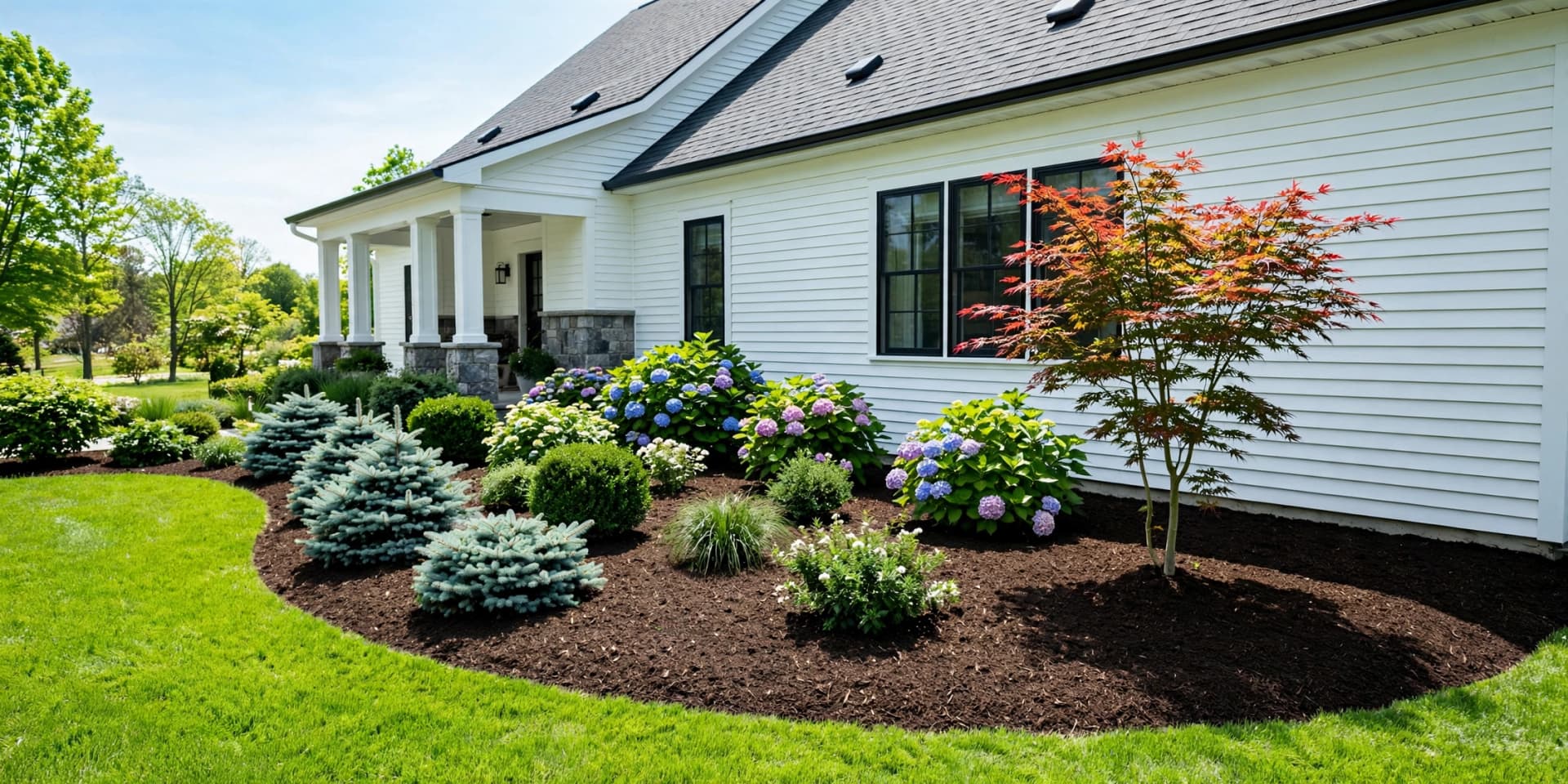
Mulch at the Depth That Helps
Enough to hold moisture and slow weeds, kept clear of trunks and crowns, and refreshed rather than endlessly layered.
How Much Mulch Is Actually Enough
Mulch is the most over-applied material in landscaping. The instinct each spring is to add another layer, and after several years the result is a thick mat that behaves nothing like mulch is supposed to. Water runs off it instead of soaking through. Roots migrate upward into the mulch layer where they are far more exposed to drought. And where the material has been heaped against trunks, bark stays damp through the season and starts to break down. So the first thing we do is check what is already there. Sometimes a bed needs nothing more than the existing material turned and pulled back from stems, and adding to it would make things worse. Where depth is genuinely low, topping up is straightforward. Topsoil is a separate question that comes up when beds have settled below their edging or the soil itself is poor enough that mulch alone will not fix what you are seeing. Getting the depth right and keeping the material off trunks and crowns is unglamorous, but it is the difference between mulch that protects your plants and mulch that quietly works against them.
Mulching & Topsoil
Mulch does real work at the correct depth and causes real harm when it is piled. Heaped against a trunk it holds moisture on bark that needs to stay dry and invites rot. Layered year on year without ever being turned or reduced, it builds into a mat that sheds water rather than admitting it.
What you get
- 01
Soil moisture held through dry stretches so plants ride out heat better
- 02
Weed germination slowed by depth rather than by chemical intervention
- 03
Trunks and crowns kept clear so bark stays dry and sound
- 04
Existing depth checked and reduced where buildup had gone too far
Frequently Asked Questions
- Enough to hold moisture and slow weeds without smothering roots. Depth matters more than most people expect in both directions, since too thin does nothing useful and too thick starts shedding water instead of letting it through.
- Bark is not built to stay wet. Mulch heaped against a trunk holds moisture right where it does damage, and over time it invites rot at the base of a tree that looked healthy above. Pulling the material back is a small job with real payoff.
- Not necessarily. Some beds only need the existing material turned and pulled back from stems. Adding a fresh layer to a bed that is already deep enough builds toward the matted state you want to avoid. We check before recommending.
- Topsoil is what plants grow in. Mulch sits on top and protects it. When a bed has settled below its edge or the soil itself is poor, topsoil addresses that. Mulch will not fix a soil problem no matter how much goes on.
- It slows germination considerably at a sensible depth, but nothing stops weeds entirely. What arrives on the wind will still find a way in. The realistic goal is a bed that stays manageable rather than one that never needs attention.