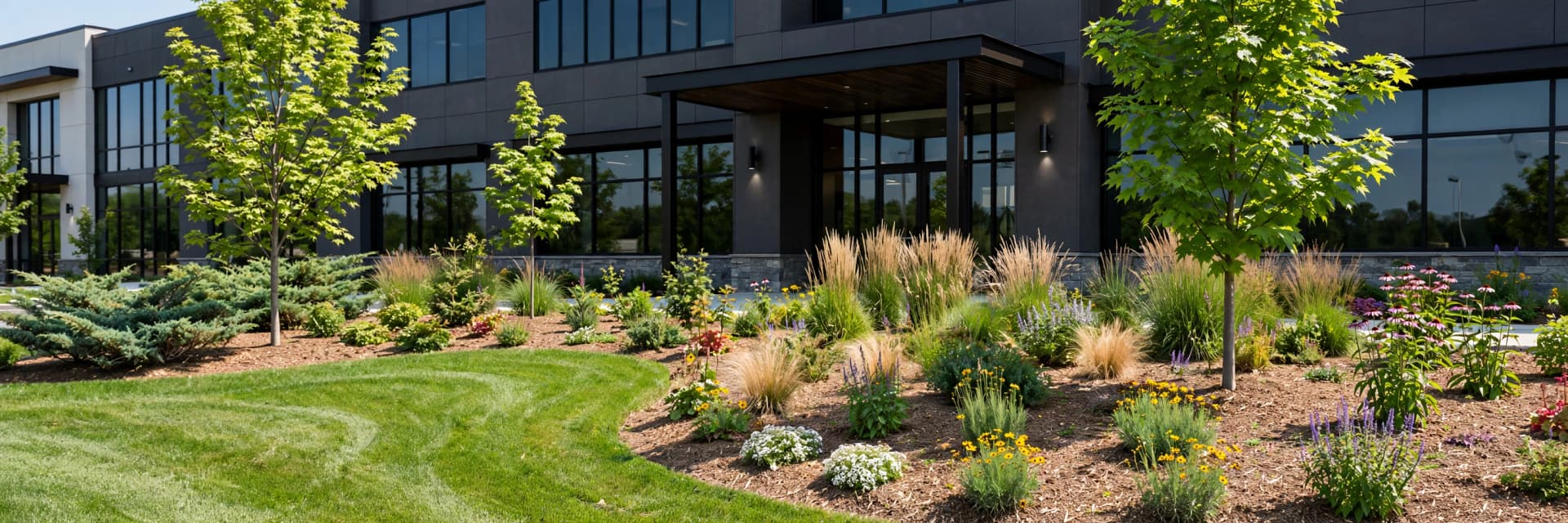
Commercial Grounds That Stay Ready for Business
Coordinate recurring landscape work around occupancy, customer access, seasonal growth, property standards, and changing weather.
How Commercial Grounds Care Differs
Commercial Landscape Maintenance
Commercial grounds need clear priorities across turf, beds, entrances, parking islands, signs, walks, and shared outdoor areas. A useful maintenance plan organizes recurring and seasonal work while accounting for operating hours, deliveries, visibility, and site-specific concerns.
What you get
- 01
Predictable service priorities throughout growth and seasonal transitions
- 02
Orderly entrances, pedestrian routes, parking edges, and focal planting beds
- 03
Mowing and edging decisions adjusted to current turf and weather conditions
- 04
Routine observation of drainage, erosion, damaged plants, and blocked sightlines
How it works
Walk the Property
Inventory maintained zones, access points, turf, beds, plants, slopes, drainage concerns, and operating constraints.
Define Scope and Calendar
Set recurring tasks, seasonal priorities, service windows, communication contacts, and areas outside the routine scope.
Perform Routine Care
Address mowing, trimming, edging, bed appearance, and organic litter according to actual growth and site needs.
Shift with the Season
Change priorities as spring growth, summer stress, leaf drop, dormancy, storms, and property events occur.
Report Conditions
Note standing water, erosion, declining plants, broken limbs, bare turf, and access conflicts for informed follow-up.
Frequently Asked Questions
- The approach can serve offices, retail sites, common-interest communities, multifamily grounds, institutions, and other managed properties. Scope depends on use, standards, and decision structure.
- No. Turf growth, weather, leaf fall, planting cycles, and site events change. The program should maintain standards while allowing seasonal priorities to move.
- Service windows, equipment routes, and priority zones are identified during planning so work can reduce conflicts with visitors, tenants, deliveries, and employees.
- Visits can reveal ponding, blocked surface structures, erosion, or saturated turf. Corrective construction normally requires a separate review of cause, outlet, and site constraints.
- Early notice of decline or damage gives the property contact time to prioritize action before a small concern becomes more disruptive or expensive.