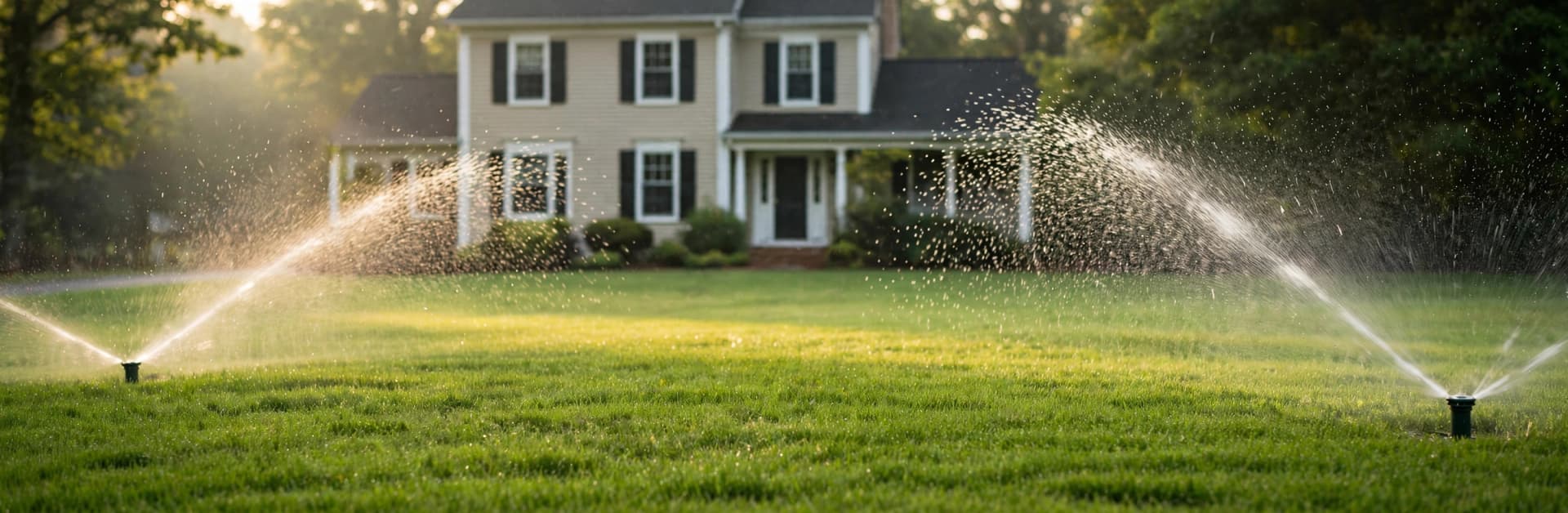
Water Each Landscape Area According to Its Needs
Organize irrigation around soil, sunlight, plant type, slope, coverage, and changing weather instead of one schedule for the entire yard.
Watering Zones That Match the Planting
Irrigation and Sprinkler System Planning
Turf, shrubs, perennials, containers, sunny slopes, and shaded soil use water differently. A sound irrigation concept considers zones, pressure, precipitation rate, controls, head placement, runoff, plant growth, service access, and seasonal operation.
What you get
- 01
Watering zones grouped around plant type and site exposure
- 02
More even coverage with less spray on pavement and buildings
- 03
Scheduling responsive to clay soil intake and current weather
- 04
Reachable components for observation, adjustment, and seasonal attention
How it works
Audit Water Conditions
Map turf, beds, slopes, shade, soil behavior, plant establishment, pressure, and existing wet or dry spots.
Create Zones and Coverage
Separate unlike needs and plan application methods, spacing, arcs, flow, and practical access for each area.
Coordinate Routes and Parts
Consider supply, controls, valves, sleeves, lines, pavement crossings, roots, drainage, and future changes.
Set Initial Operation
Base starting cycles on soil intake, exposure, rooting, precipitation rate, plant needs, and present season.
Observe and Adjust
Watch for misting, pooling, runoff, blocked spray, tilted heads, leaks, and growth that interrupts patterns.
Frequently Asked Questions
- Application may exceed intake, particularly on compacted clay or slopes. Dividing operation into shorter cycles with pauses can sometimes increase absorption.
- Their roots, preferred application methods, and demands usually differ. Separation allows more appropriate control and reduces overwatering of one area.
- Spacing gaps, low pressure, clogged openings, tilted equipment, wind, blocked spray, wrong arcs, or compacted soil are possible causes.
- Review it as rainfall, temperature, day length, maturity, and site conditions shift. A midsummer setting should not continue automatically into cool autumn.
- Early coordination can prevent later disturbance. Pavement, sleeves, plant plans, roots, drainage, utilities, and expected zones should be considered together.