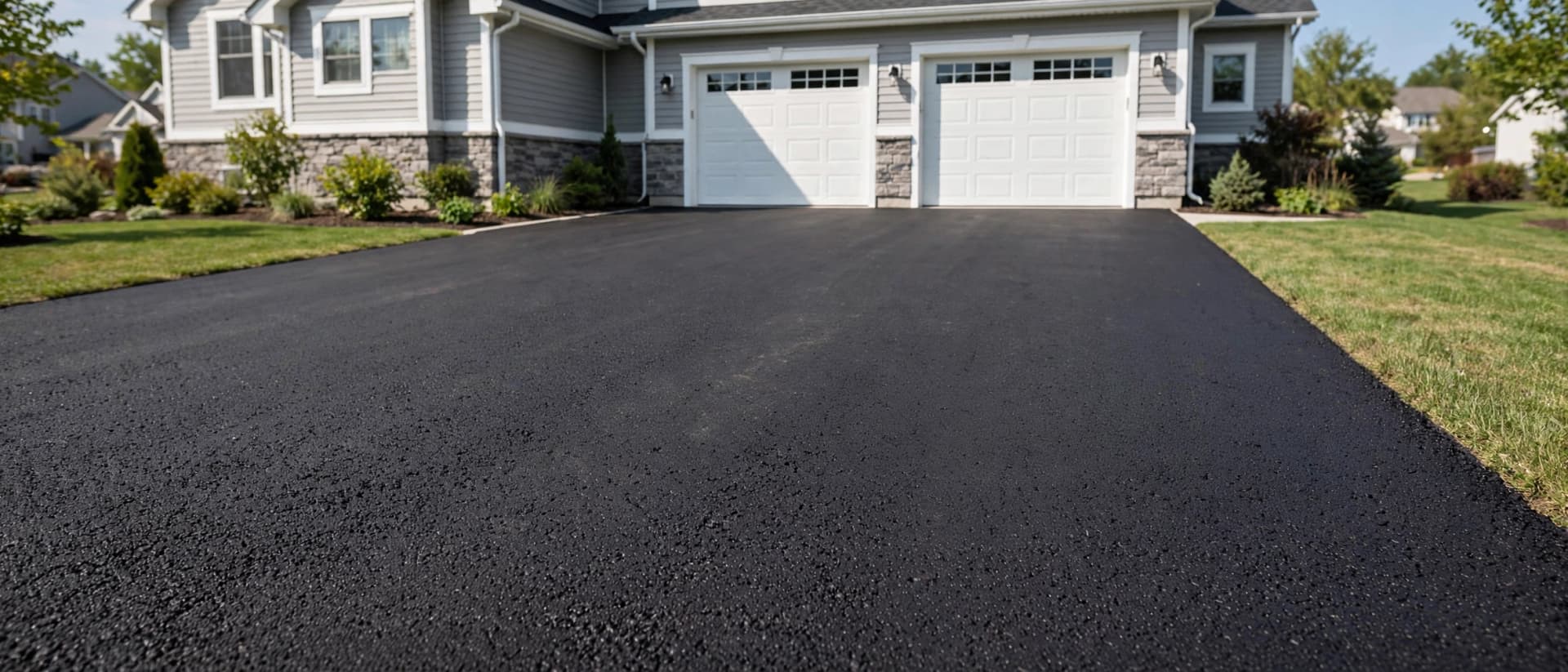
Asphalt Driveways Built From the Base Up
Blacktop is the surface. What decides how long a driveway lasts is the compacted base underneath it and where water goes.
Choosing Between Asphalt and Pavers
Asphalt and pavers get grouped together because they both end up as a driveway, but they are not the same job and they are not interchangeable. Asphalt goes down as a continuous surface, which makes it quick to clear in winter and simple to patch if one area is damaged. Pavers are individual units laid to a pattern, which lets them move slightly with the ground and be lifted individually. If you are weighing the two, the honest answer depends on the look you want, the budget, and how the driveway gets used, and we are happy to talk it through rather than push one. What both share is that failure starts underneath. An asphalt drive laid over a base that was not compacted properly will flex under vehicle weight until the surface cracks, and once water gets into those cracks and freezes, the damage accelerates every winter. Pitch matters just as much. Water standing on a surface finds its way in eventually. Edges are the third weak point, since an unsupported perimeter crumbles first under the wheels that habitually track across it. Getting those three right is most of the job.
Asphalt Paving
Asphalt is a different material from pavers, with different requirements. It is laid as a continuous surface over a prepared base, and it fails the same way most paving fails: from below, where an under-compacted base or trapped water lets the surface flex until it cracks.
What you get
- 01
A continuous surface that sheds water and clears easily in winter
- 02
Base depth and compaction sized for the traffic the drive will carry
- 03
Pitch set so water leaves the surface rather than standing on it
- 04
Edges supported so the perimeter does not crumble under wheel loads
Frequently Asked Questions
- They suit different priorities. Asphalt is a continuous surface, quick to clear in winter and simple to patch. Pavers offer more in appearance and can be lifted individually. We will talk through both against your budget and how the drive is used.
- Usually because the base underneath moved. An under-compacted or poorly drained sub-base lets the surface flex under vehicle weight until it cracks, and water entering those cracks then freezes and widens them each winter.
- Sometimes, and sometimes that just puts a new surface over the problem that broke the old one. It depends on the condition of what is underneath. We would rather look at it and tell you honestly which situation you are in.
- New asphalt needs time before it takes full traffic, and the wait varies with conditions including temperature. We tell you what to expect for your job rather than quoting a single figure that may not hold on the day.
- Edges are where asphalt drives usually start to go, because the perimeter is unsupported and takes wheel loads whenever anyone cuts the corner. Addressing edge support during the work costs far less than repairing crumbling edges later.